Passport Card vs Passport Book: Which You Actually Need in 2026
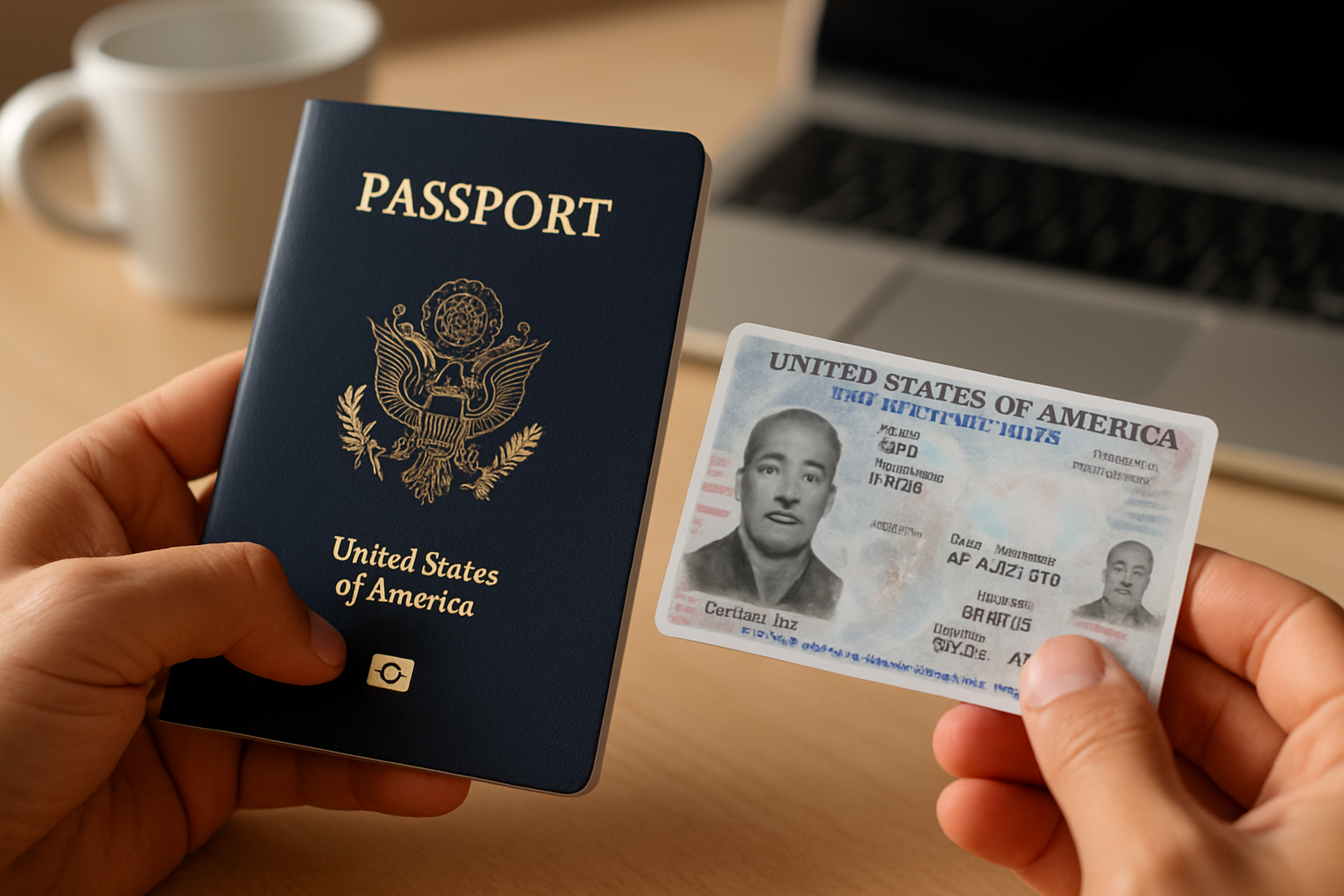
Passport card vs book: the card costs less and fits in your wallet, but only works for land and sea travel. Here's which one you actually need in 2026.
TL;DR
The passport card ($30 renewal / $65 new) only works for land and sea travel between the U.S., Canada, Mexico, and the Caribbean. The passport book ($130 renewal / $165 new) works everywhere, including any international flight. If you ever fly internationally, you need the book.
At a glance
- Passport card fee (new, DS-11): $65 government fee — verified at travel.state.gov
- Passport book fee (new, DS-11): $165 government fee
- Passport card fee (renewal, DS-82): $30
- Passport book fee (renewal, DS-82): $130
- Card valid for: land and sea crossings into Canada, Mexico, and the Caribbean; domestic flights (REAL ID)
- Book valid for: everything above, plus all international air travel
- Expiration: 10 years (adult), 5 years (under 16)
Why this comparison matters
Most people realize they need a passport when they’re booking a trip. That’s when the State Department’s website asks you to choose: book, card, or both? The card is cheaper, but there’s a real trade-off. Picking the wrong one and showing up at the airport can mean a missed flight with no refund.
The confusion is understandable. Both are U.S. passports. Both prove citizenship. Both satisfy REAL ID. But only the book gets you on a plane to Europe, or even a quick flight down to Cancún.
What each document actually does
Passport book
The standard blue booklet is the one most people picture when they hear “passport.” It has 17 or 52 pages (you choose at application time) and works for every type of international travel — air, land, and sea.
Use it for:
- All international flights, including Canada, Mexico, the Caribbean, and everywhere else
- Land border crossings into Canada and Mexico
- Closed-loop and open-loop cruises
- Any TSA domestic checkpoint (satisfies REAL ID)
- Returning to the U.S. from abroad
A passport book from the State Department is the single most flexible travel document a U.S. citizen can carry. If you travel internationally more than once a decade, this is the one to have.
Passport card
The passport card is credit-card size and fits in a wallet. It was created specifically for people who cross into Canada or Mexico by car or walk across the border regularly — the card makes that faster. It’s also valid for closed-loop cruises from U.S. ports.
Use it for:
- Land border crossings into Canada and Mexico
- Sea crossings and closed-loop cruises from U.S. ports
- Domestic TSA checkpoints (REAL ID compliant)
- Caribbean travel by sea
Do not use it for:
- Any international flight, including to Canada, Mexico, or the Caribbean
- Open-loop cruises (ship starts or ends outside the U.S.)
Side-by-side comparison
| Feature | Passport Card | Passport Book |
|---|---|---|
| New application fee | $65 | $165 |
| Renewal fee | $30 | $130 |
| Size | Credit-card (wallet-sized) | Standard booklet |
| Valid for domestic flights | Yes (REAL ID) | Yes (REAL ID) |
| Valid for international air | No | Yes |
| Land border: Canada/Mexico | Yes | Yes |
| Sea/closed-loop cruise | Yes | Yes |
| Open-loop cruise or intl flight | No | Yes |
| Expiration | 10 years (adults) | 10 years (adults) |
Real ID compliance — yes, both qualify
If your question is “will this get me through TSA at the airport?” — both the card and the book answer yes. Either one satisfies the REAL ID requirement for domestic U.S. flights. You do not need a separate REAL ID-compliant driver’s license if you carry a current U.S. passport in any form.
This matters because a lot of people are getting passport cards specifically as a REAL ID alternative. At $30 for a renewal, it’s competitive with the $25–$50 DMV fee for a REAL ID upgrade, and you get broader travel capability in the bargain. See our REAL ID vs passport comparison for the full breakdown.
Who should get which
Get only the book if:
- You fly internationally even occasionally
- You’re not sure yet where you’ll travel
- You want one document that does everything
Get only the card if:
- You regularly drive or take the ferry across the border to Canada or Mexico
- You don’t fly internationally (or already have a book that covers that)
- You want an inexpensive REAL ID alternative for domestic travel
Get both if:
- You fly internationally but also cross the border by car frequently
- You want a backup travel document that fits in your wallet
- You’re applying for a child who needs both a “keep safe at home” card and a book for family travel abroad
Can you have both? Yes — here’s how
You can apply for both the card and book at the same time. On form DS-11 (new applicants), there’s a checkbox for both. Add $65 for the card on top of the $165 book fee. Same application, same photos, same visit to an acceptance facility.
If you already have a book and want to add a card later, you use form DS-82 (renewal by mail, $30) if your book is less than 15 years old, or DS-11 again ($65) if it’s expired or you’re a new adult applicant.
Having both makes sense for people who commute across the border by car during the week and take international flights for vacation. The card lives in the wallet; the book stays in the luggage.
Common pitfalls
- Booking an international flight with only a card. Airlines check your document before boarding. You will not be allowed on the flight.
- Confusing “cruise” eligibility. Open-loop cruises (fly to the ship, return from a different port) require the book even if the itinerary looks simple.
- Not accounting for different expiration dates. If you get both documents at different times, they expire at different times. Track them separately.
- Applying for the card as a REAL ID substitute and then deciding to fly internationally. You’d have to apply for the book separately — at least plan ahead.
What to do next
If you’re not sure which one to get, start with the book. It covers every travel scenario and isn’t that much more expensive than the card alone. If you travel to Canada or Mexico by land regularly, adding the card at application time for an extra $65 is worth it.
Ready to apply? Start your passport application at egovrush — we’ll check your eligibility, review your documents, and handle the paperwork from here.
Sources: U.S. Passport Fees — travel.state.gov, Passport Card — travel.state.gov. Fees verified April 2026.
Frequently asked questions
Can I use a passport card for international flights?
No. The U.S. passport card is not valid for international air travel. You need a passport book to board any flight that crosses an international border.
How much does a passport card cost in 2026?
For a first-time applicant, the card costs $65 in government fees. A renewal by mail costs $30. Confirmed at travel.state.gov.
Does the passport card count as a REAL ID?
Yes. A U.S. passport card satisfies the REAL ID requirement at every TSA checkpoint and is accepted for domestic flights.
Can I have both a passport card and a passport book?
Yes. You can apply for both at the same time on a single DS-11 form, or add the card later via DS-82.
Is the passport card good for cruises?
Only for closed-loop cruises — trips that depart from and return to the same U.S. port. Open-loop cruises require the book.
How long does it take to get a passport card?
Processing times match the book: roughly 6–8 weeks routine and 2–3 weeks expedited as of April 2026.
Need help with your passport application?
We handle the form, photo check, and tracking. Pay only after eligibility is confirmed.
Related reading
REAL ID enforcement is in full effect at every U.S. airport. If your driver's license isn't compliant, here's exactly what flies and what doesn't in 2026.
Both REAL ID and a U.S. passport work for domestic flights, but they're not equal. Here's when each makes sense and which one you should carry in 2026.
Proof of citizenship for a U.S. passport: a certified birth certificate works for most people, but 4 other documents are accepted. Here's what the State Dept accepts.