Adoption Records: Replacing Your Birth Certificate
Adoptees typically receive an amended birth certificate showing adoptive parents. Original records are sealed in most states. Here's how to get both.
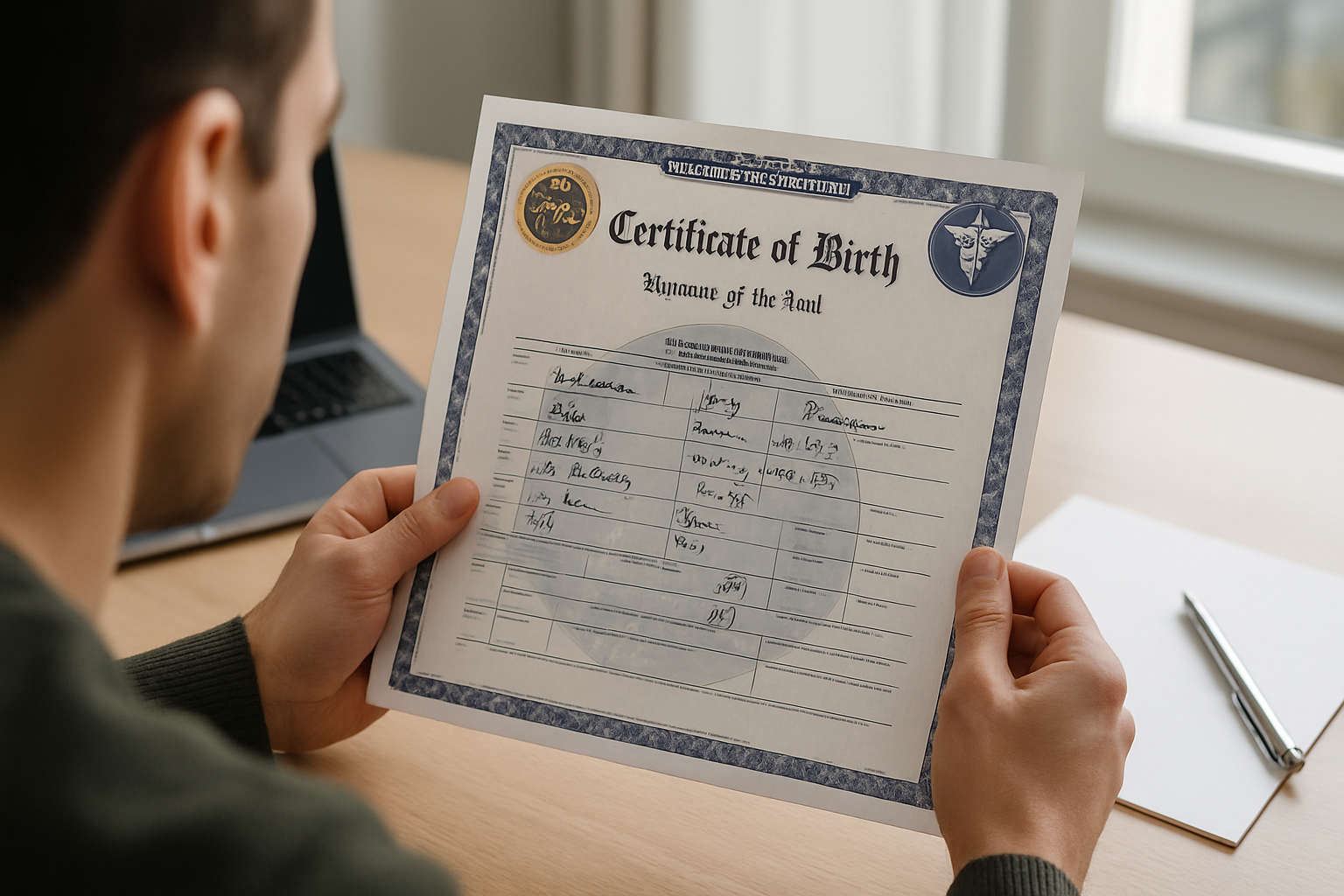
TL;DR
Adoptees typically receive an amended birth certificate that lists the adoptive parents — not the birth parents. This is the document used for passports, REAL ID, and all official purposes. The original birth certificate is sealed in most states. Access to the original varies by state: more than half now allow adult adoptees to request it directly; the rest require a court order or mutual consent registry process.
At a glance
- Amended birth certificate: issued by the state where adoption was finalized; lists adoptive parents; accepted everywhere for identity purposes
- Original birth certificate: sealed after adoption in most states; shows birth parents
- Access to original: unrestricted in 25+ states for adult adoptees; court order required in others
- International adoptees: re-adoption decree or Certificate of Citizenship needed; U.S. birth certificate issued in adoption state
- ICWA cases: tribal law and federal law may impose additional procedural requirements
Why adoptees have a different path
When a domestic adoption is finalized, the state creates a new legal identity for the adopted child. As part of that process, the original birth certificate — the one created at birth, naming the birth parent(s) — is sealed in the state’s vital records system. A new, amended birth certificate is issued that names the adoptive parent(s) as the legal parents.
This legal fiction was designed to give the adopted child a clean start and to protect the privacy of birth parents. It was also the system that allowed adoption to function before DNA testing, open adoptions, and digital record access existed. The sealing of original birth records was standard practice through most of the 20th century.
The practical effect: most adoptees have an amended birth certificate they can order normally, and a sealed original they may or may not be able to access depending on when and where the adoption occurred.
The amended birth certificate: what it is and where to get it
The amended birth certificate is your official identity document. It looks identical to a standard certified birth certificate — raised seal, registrar’s signature, security paper, official format. It lists your legal (adoptive) parents as your parents and your name as legally established through the adoption. For virtually every government purpose — a passport application, REAL ID, Social Security, school enrollment — the amended certificate is fully accepted.
Where to order it: The amended certificate comes from the vital records office of the state where the adoption was finalized — which is not necessarily your birth state. If you were born in Georgia but your adoption was finalized by a court in New York, New York holds the amended record and you order it from New York.
If you’re unsure where the adoption was finalized, check any adoption paperwork in the family’s possession, including the adoption decree and any court orders. The state name on the court seal is the right starting point.
Standard ordering process: Contact the vital records or health department office of the adoption state. Most states accept online orders (expedited, 2–5 business days), mail orders (4–12 weeks), and in-person orders (same-day or next-day in many states). Fees run $15–$50 per certified copy.
For a full walkthrough of the ordering process including state-specific resources, see our birth certificate replacement guide.
Using the amended certificate for a passport
The State Department treats an amended birth certificate from an adoption exactly the same as any other certified birth certificate. The passport application requirements apply equally: raised seal, registrar signature, state-issued certified copy. A photocopy is never accepted.
One note: the amended certificate must show both adoptive parents’ names in most cases. If you were adopted by a single parent, contact the State Department directly to confirm what supplemental documentation, if any, is needed.
Accessing the original sealed birth certificate
For many adoptees, knowing their birth family history — medical history, genetic information, biological identity — requires access to the original birth certificate. This is where the legal landscape becomes state-specific.
States with unrestricted adult adoptee access
As of 2026, more than half of U.S. states allow adult adoptees — typically those who are 18 or older — to request their original birth certificate directly from the vital records office, without a court order and without the birth parent’s consent. You simply request it the same way anyone else requests a certified copy.
States in this category include (among others): Alabama, Alaska, Colorado, Connecticut, Hawaii, Illinois, Kansas, Maine, Maryland, Massachusetts, Michigan, Minnesota, Missouri, Montana, Nebraska, Nevada, New Hampshire, New Jersey, New York, Ohio, Oklahoma, Oregon, Rhode Island, Utah, Vermont, Virginia, and Washington. Laws change, so confirm your birth state’s current rules directly with their vital records office.
States requiring a court order or mutual consent
Other states still require either a court order or a match through a mutual consent registry before releasing the original birth certificate to an adoptee. In these states:
- Court order route: An adoptee petitions the family court that handled the original adoption. The court may grant access based on “good cause,” which typically includes medical necessity. This process requires an attorney in most cases and takes several months.
- Mutual consent registry: Many states maintain registries where both the adoptee and the birth parent can voluntarily register their consent to contact or information release. If both parties register, the state facilitates the exchange.
The Child Welfare Information Gateway maintained by the federal government provides a state-by-state summary of adoptee access laws, updated regularly.
State-by-state access overview
| Access type | Examples (2026) |
|---|---|
| Unrestricted adult adoptee access | AL, AK, CO, CT, HI, IL, KS, ME, MA, MI, MN, MO, MT, NE, NV, NH, NJ, NY, OH, OK, OR, RI, UT, VT, VA, WA |
| Court order required | AR, FL, GA, ID, IN, IA, KY, LA, MS, ND, PA, SC, SD, TN, TX, WV, WI, WY |
| Mutual consent / intermediary process | CA, AZ, DE, NM, NC, and others |
Note: this table reflects the general legislative posture as of April 2026. Laws in this area have been evolving — several states have moved from restricted access to unrestricted access in recent years. Always verify with the current state vital records office before acting.
The Indian Child Welfare Act (ICWA): special considerations
The Indian Child Welfare Act of 1978 applies whenever a child being adopted is a member — or is eligible for membership — in a federally recognized Native American tribe. ICWA imposes requirements that differ significantly from standard state adoption law:
- The tribe must be notified before any involuntary termination of parental rights or foster care placement
- ICWA establishes placement preferences that prioritize placement with the child’s extended family, then with other tribal members, then with other Native families
- The tribe may intervene in adoption proceedings as a party
For adoptees with ICWA cases, the tribal nation may have its own records and its own rules about identity documentation. If you believe ICWA applies to your adoption, contact the relevant tribal nation’s enrollment office in addition to the state vital records office.
International adoption: the U.S. birth certificate path
Children adopted internationally and brought to the United States under an IR-3 or IR-4 visa do not have a U.S. birth certificate in the ordinary sense. Two main paths exist:
Re-adoption or readoption affirmation
Many states allow — and some require — internationally adoptive parents to complete a domestic re-adoption proceeding through the state courts after the child arrives in the U.S. When the re-adoption is finalized, the state issues a U.S. birth certificate for the child, naming the adoptive parents. This document is fully accepted for all U.S. government purposes including passports and REAL ID.
Certificate of Citizenship
Under the Child Citizenship Act of 2000, most internationally adopted children who were admitted to the U.S. as lawful permanent residents and who had at least one U.S. citizen parent automatically became U.S. citizens upon entry. A Certificate of Citizenship (Form N-560) can be obtained from USCIS and serves as proof of citizenship for passport applications — even without a U.S. birth certificate.
For children adopted internationally but never re-adopted domestically, and who don’t have a Certificate of Citizenship, the State Department’s adoption and citizenship page outlines the specific documentation path for each situation.
Common pitfalls
- Ordering from the wrong state. The amended birth certificate comes from the state where the adoption was finalized — not the birth state. Requesting from the wrong state returns nothing.
- Assuming original records are accessible everywhere. Many states still require a court order. Don’t assume unrestricted access applies in your birth state without checking.
- Confusing the amended certificate with the original. The amended certificate is what you use for passports and ID. If you’re trying to find birth family information, that requires the original (sealed) record — a separate process.
- Not accounting for ICWA if applicable. Adoptees with a Native American tribal connection may need to involve the tribe in any records access process.
- Thinking a re-adoption is automatic for international adoptees. It’s not — it requires a separate state court proceeding after the child arrives in the U.S. Some families skip this step, not realizing the U.S. birth certificate it creates may be needed later.
What to do next
If you need a standard certified copy of your amended birth certificate — for a passport, REAL ID, or other official purpose — start at the vital records office of the state where your adoption was finalized. The process is the same as any other birth certificate replacement.
If you’re trying to access your original sealed birth certificate, check your birth state’s current adoptee access law. If your state allows unrestricted adult access, contact vital records directly. If a court order is required, consult with an adoption attorney in your birth state.
Frequently asked questions
What birth certificate does an adoptee get?
After a domestic adoption is finalized, the state issues an amended birth certificate listing the adoptive parent(s) as the legal parents. The original is sealed. The amended certificate is accepted everywhere for identity purposes.
Can an adoptee get their original birth certificate?
In more than half of U.S. states, yes — adult adoptees can request the original directly from vital records without a court order. In the remaining states, a court order or mutual consent registry match is required. Rules are based on the state where the adoption was finalized.
Is an amended birth certificate accepted for a U.S. passport?
Yes. An amended birth certificate from a finalized adoption is treated identically to any other certified birth certificate by the State Department.
I was adopted internationally. What birth certificate do I use?
Many international adoptees have a U.S. birth certificate issued after a domestic re-adoption proceeding. If no re-adoption occurred, a Certificate of Citizenship (Form N-560) from USCIS typically serves as proof of citizenship for a passport application.
What is ICWA and how does it affect adoption records?
The Indian Child Welfare Act applies when the adopted child is a member or eligible member of a federally recognized tribe. ICWA requires tribal notification and establishes placement preferences. Tribal records and enrollment status may also affect identity documentation for affected adoptees.
How do I find my birth parents through adoption records?
The amended birth certificate does not list birth parents. Access to the original sealed birth certificate (which may name birth parents) depends on your birth state’s law. Many states also have mutual consent registries. The Child Welfare Information Gateway at childwelfare.gov maintains state-by-state guidance.
Sources: Child Welfare Information Gateway — Adoptee Access Laws, U.S. State Dept. — Intercountry Adoption and Citizenship. Information verified April 2026.
Related reading
Birth certificate replacement costs $15–$50 per state. Order from your state of birth, not where you live. Routine: 4–12 weeks. Expedited: 2–3 days.
A certified birth certificate has a raised seal and registrar's signature. A photocopy doesn't count — even of a certified copy. Here's what agencies require.
Your birth certificate for a passport must be a state-issued certified copy with a raised seal and both parents' names. Hospital souvenirs and photocopies are rejected.
A birth certificate apostille certifies your U.S. document for use abroad. You get it from the Secretary of State in your birth state — not from the federal government.