Global Entry for Green Card Holders: Eligibility & Application
Green card holders are eligible for Global Entry. Here's what LPRs need to know about the $120 application, background check, interview, and I-551 requirement.
TL;DR
Lawful Permanent Residents (green card holders) are fully eligible for Global Entry. The $120 fee, application process, and interview are the same as for U.S. citizens — but CBP’s background check is more thorough because LPR status carries admissibility conditions that citizenship does not. A valid I-551 is required at every stage of the application.
At a glance
- Cost: $120 for a 5-year membership — last verified April 2026 at cbp.gov
- Eligibility: U.S. Lawful Permanent Residents with a valid I-551
- Document required: Current, valid Green Card (I-551) + valid foreign passport
- Background check: Same CBP process as for citizens, plus admissibility review
- Interview: Required for all first-time applicants, same as for citizens
- Includes: TSA PreCheck via PASSID on domestic flights
- Where to apply: ttp.cbp.dhs.gov
Why this matters for LPRs
International travel is a routine part of life for millions of green card holders — visiting family abroad, business trips, vacation. Every return to the U.S. means clearing customs at an international airport, often in lines that stretch 60 to 90 minutes after a long flight. Global Entry exists specifically to shorten that experience.
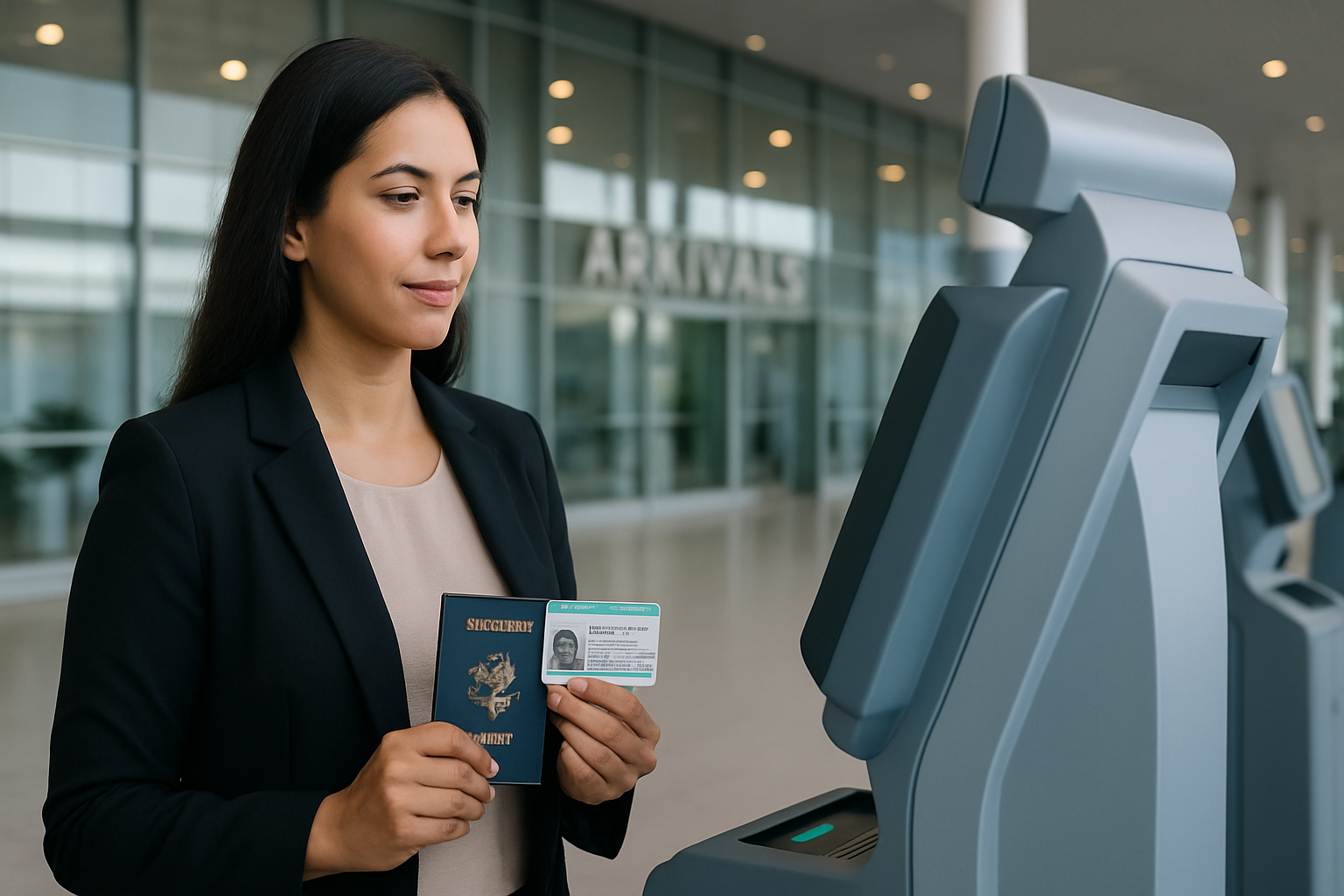
Global Entry members bypass the standard customs line and use dedicated kiosks. You scan your passport or card, provide your fingerprints, answer a few customs questions on-screen, and walk out. The typical kiosk interaction takes 60–90 seconds. For LPRs who travel internationally several times per year, that time savings adds up quickly.
The second benefit is often the one that surprises people: Global Entry approval comes with a PASSID that doubles as a Known Traveler Number (KTN). That KTN enrolls you in TSA PreCheck for domestic flights automatically. One $120 fee covers both international arrival lanes and domestic departure lanes for five years.
LPR eligibility: who qualifies
CBP’s Global Entry program is open to:
- U.S. citizens and nationals
- U.S. Lawful Permanent Residents
- Citizens of several countries that participate in reciprocity agreements with CBP (including Germany, the Netherlands, Panama, South Korea, Switzerland, Taiwan, and the United Kingdom, among others)
- Mexican nationals (through SENTRI, which includes Global Entry access)
As an LPR, your citizenship is irrelevant for Global Entry eligibility — what matters is your permanent resident status and your admissibility record. A citizen of India, Brazil, Nigeria, or any other country who holds a valid U.S. Green Card can apply.
One important nuance: if you are a conditional permanent resident (holding a 2-year green card rather than a 10-year green card), CBP will review your application with that in mind. Conditional LPR status is a grounds-of-inadmissibility consideration. You can still apply and be approved, but the background review is more deliberate.
The application process for green card holders
Step 1: Apply on the TTP portal
Go to ttp.cbp.dhs.gov and create an account via Login.gov or ID.me. Select Global Entry as your program and complete the application. You will need:
- Your I-551 Green Card number and expiration date
- Your foreign passport information
- Your travel history (countries visited in the past five years)
- Your employment history
- Your residential address history
The background questions on the application ask about prior arrests, criminal convictions, immigration violations, and prior denials or revocations of trusted-traveler status. Answer every question accurately. CBP’s background check will surface discrepancies.
Step 2: Pay the $120 fee
The application fee is $120, payable by credit or debit card. This fee is non-refundable even if CBP denies your application. If you hold a premium travel credit card that offers Global Entry fee reimbursement (many Chase, Amex, and Capital One cards do), use that card to pay and trigger the statement credit.
Step 3: Wait for conditional approval
After submitting, your application status moves to “Pending Review.” CBP’s background check covers both standard criminal databases and immigration admissibility databases. For LPR applicants, this phase can take longer than for citizens because CBP is cross-referencing your A-number (alien registration number) across immigration records.
If your background check clears and CBP determines you are preliminarily eligible, your status moves to Conditional Approval. This means CBP is satisfied with the background review but still requires the in-person interview.
Step 4: Schedule and attend the interview
All first-time Global Entry applicants — LPR or citizen — must complete an in-person interview at a CBP enrollment center or via CBP’s interview-on-arrival process. The interview-on-arrival option is available at some international airports: when you land in the U.S., a CBP officer flags you as conditionally approved and conducts the interview at the port of entry, saving you a separate trip to an enrollment center.
Bring to your interview:
- Your valid I-551 Green Card (the physical card — not a photocopy)
- Your valid foreign passport
- Your conditional approval letter (printed or on your phone)
- Any additional identity or address documents CBP requested
The interview is typically 10–15 minutes. The officer will verify your identity, confirm your travel history, and ask basic customs and admissibility questions. Read the Global Entry interview guide to know what to expect and how to prepare.
The background check: what’s different for LPRs
The most meaningful difference between an LPR Global Entry application and a citizen’s application is the scope of CBP’s background review. U.S. citizens face potential criminal inadmissibility, but LPRs face both criminal inadmissibility AND immigration grounds of deportability.
CBP is looking for:
- Criminal history: arrests, convictions, or deferred adjudications (including misdemeanors and DUIs). Any criminal history warrants scrutiny.
- Immigration record: prior visa violations, overstays, deportation orders, voluntary departures, or removal proceedings. Any of these can result in denial.
- Admissibility history: prior denials of admission at a port of entry, or waivers of inadmissibility on file.
- Tax compliance: CBP may check whether you have unreported foreign bank accounts or significant tax issues. Less common, but it has come up.
An LPR with a clean record — no arrests, no immigration issues, no prior Global Entry denials — will typically progress through the review without issue. Applicants with any of the above should consult an immigration attorney before applying, because a Global Entry denial can sometimes flag a records review that has broader immigration implications.
Extended absences and re-entry
Global Entry is valid at every U.S. international port of entry where CBP operates kiosks. LPRs use it exactly the same way as citizens: scan passport, give fingerprints, answer the customs declaration on-screen, collect the receipt, proceed to baggage claim.
The program does not, however, change the rules about extended absences. If you are outside the U.S. for more than 180 days (6 months), CBP may consider you to have abandoned your LPR status. Global Entry membership doesn’t protect against that review — it just speeds up the kiosk process. If you’re planning an extended stay abroad, look into a re-entry permit (USCIS Form I-131) before you leave, which provides protection for absences up to 2 years.
Similarly, Global Entry does not replace Advance Parole for LPRs who have a pending adjustment of status or other immigration proceedings. If you are in that situation, consult your immigration attorney before leaving the country.
Maintaining your Global Entry as an LPR
A few things to keep current after you are approved:
- Renew your green card before it expires. Your I-551 is the document CBP has on file. An expired green card without timely renewal may cause CBP to flag your membership. Update your TTP profile with the new card number after renewal.
- Report address changes. Log into your TTP account and update your address whenever you move. CBP may send correspondence to the address on file.
- Naturalization. If you become a U.S. citizen, your Global Entry membership continues uninterrupted — your PASSID stays the same. You can update your citizenship status in your TTP profile.
- Renewal timing. The Global Entry renewal process is the same for LPRs as for citizens — start up to 12 months before expiration at ttp.cbp.dhs.gov.
Comparison: LPR vs citizen application
| Factor | U.S. Citizen | Lawful Permanent Resident |
|---|---|---|
| Eligible | Yes | Yes |
| Application fee | $120 | $120 |
| Required documents | U.S. passport | I-551 + foreign passport |
| Background check scope | Criminal only | Criminal + immigration admissibility |
| Interview required (first-time) | Yes | Yes |
| PreCheck included | Yes (same PASSID) | Yes (same PASSID) |
| Extended-absence rules | None | 180-day / 6-month LPR rules apply |
Common pitfalls
- Applying with an expired or soon-to-expire green card. CBP requires a valid I-551. If your card expires within 6 months, renew it first through USCIS, then apply for Global Entry.
- Assuming the interview will be waived. First-time applicants — LPR or citizen — always require an interview. Only renewals are routinely approved without one.
- Not disclosing prior immigration issues. CBP’s databases are thorough. Omitting a prior deportation order, visa overstay, or border incident is treated as misrepresentation, which is itself a ground of inadmissibility.
- Forgetting to update your TTP profile after green card renewal. Your old card number is what CBP has on file. After renewing your I-551, log into ttp.cbp.dhs.gov and update the card number and expiration date.
- Misunderstanding the 6-month absence rule. Global Entry speeds up your customs processing; it does not grant you any additional immigration rights. Extended stays abroad still require a re-entry permit.
What to do next
If you hold a valid Green Card and you travel internationally more than once or twice a year, Global Entry is one of the most practical travel investments you can make. The application takes about 30 minutes online, the background check runs in the background, and one interview at an enrollment center is all it takes.
Our Global Entry service walks you through the application, helps you prep for the interview, and tracks your status through to approval. Start your Global Entry application and let us handle the process from here.
Frequently asked questions
Can a green card holder apply for Global Entry?
Yes. U.S. Lawful Permanent Residents are eligible to apply for Global Entry. You need a valid I-551 and must pass CBP’s background and admissibility review. The fee is $120, the same as for citizens.
What documents do I need at the Global Entry interview as an LPR?
Bring your valid I-551 Green Card (physical card), your valid foreign passport, and your conditional approval letter. CBP will verify your LPR status, immigration record, and identity at the interview.
Does Global Entry help me re-enter the U.S. after extended travel abroad?
Global Entry speeds up your customs processing at the port of entry. It does not change LPR absence rules — CBP can still question your LPR status if you have been abroad for more than 6 months without a re-entry permit.
Is the background check harder for green card holders than for citizens?
CBP applies a more thorough admissibility review to LPR applicants because LPRs are subject to grounds of deportability that citizens are not. Any prior immigration violations will be scrutinized closely.
Does Global Entry include TSA PreCheck for green card holders?
Yes. Approved Global Entry members — citizens and LPRs alike — receive a PASSID that functions as a KTN for TSA PreCheck on domestic flights. Both programs are included in the single $120 fee.
What happens to my Global Entry if my green card expires?
If your I-551 expires without renewal, CBP may flag your Global Entry membership. Renew your green card promptly and update your card number in your TTP profile at ttp.cbp.dhs.gov.
Sources: CBP Global Entry program page, CBP Global Entry FAQ.
Want us to handle your Global Entry application?
We complete the CBP form, prep your documents, and book your interview.
Related reading
Global Entry renewal costs $120 and can be started up to 1 year before expiration. No interview required for most members. Step-by-step guide for 2026.
Global Entry interview takes 10–15 minutes. Learn what documents to bring, common questions CBP asks, and how enrollment-on-arrival works at the airport.
Global Entry conditional approval means you passed the background check — but you still need an interview within 365 days. Here's exactly what to do next.
TSA PreCheck vs Global Entry: cost, time, and who each program is for. Plus when getting both makes sense — and how Global Entry includes PreCheck free.