Global Entry Interview: What to Bring & What They Ask
Global Entry interview takes 10–15 minutes. Learn what documents to bring, common questions CBP asks, and how enrollment-on-arrival works at the airport.
TL;DR
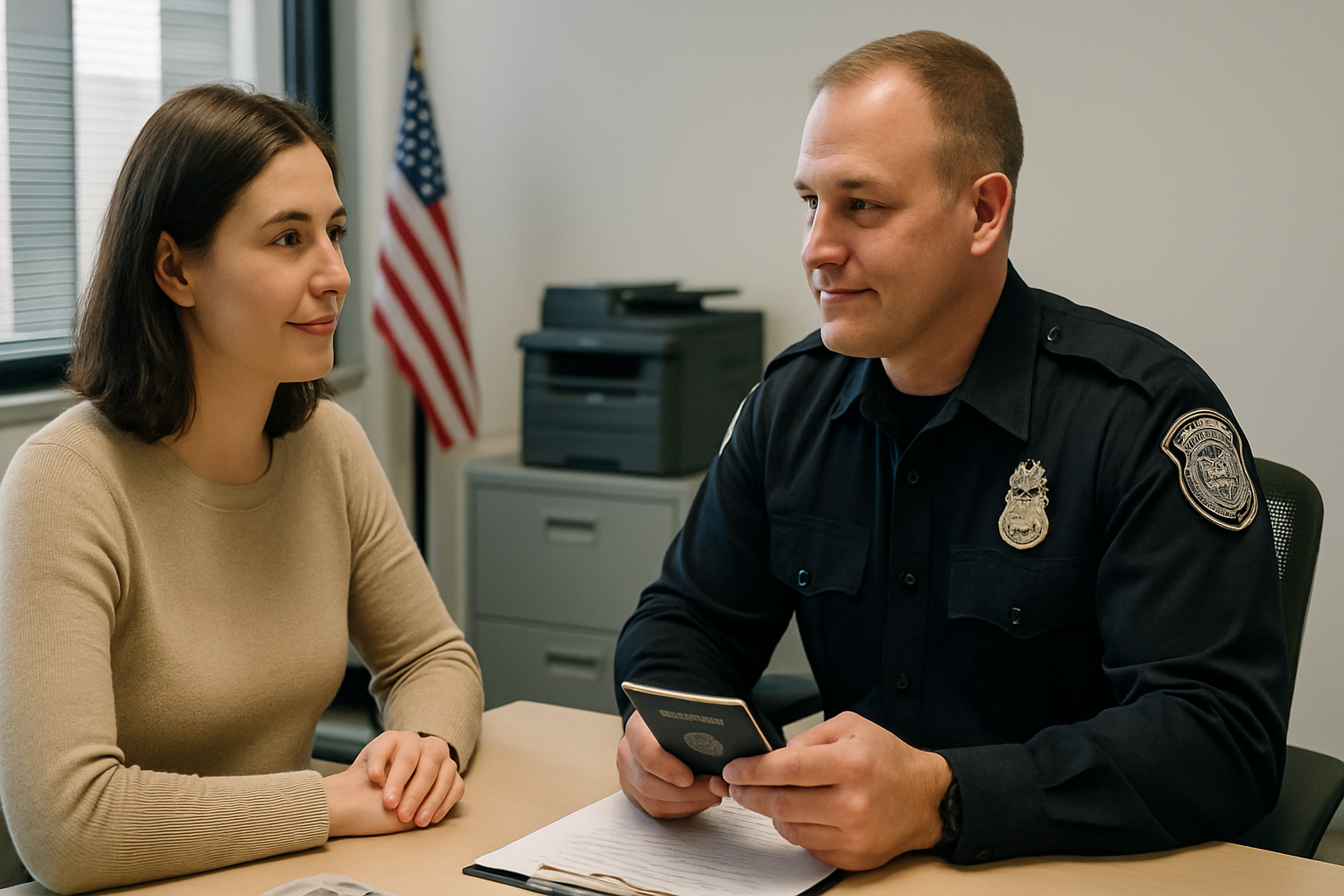
The Global Entry interview is a short, in-person meeting with a CBP officer that typically takes 10–15 minutes. The officer checks your documents, takes your photo and fingerprints, and asks a handful of factual questions. Most applicants who arrive prepared receive approval on the spot.
At a glance
- Who needs it: Anyone with Global Entry conditional approval who hasn’t yet completed the interview
- Duration: 10–15 minutes typical
- Documents to bring: Valid passport, second photo ID, conditional approval letter, proof of address
- Decision timing: Usually immediate; occasionally delayed a few days
- Alternative to scheduling: Enrollment on arrival (on return from international trip)
- Cost: Already paid at application — no fee at the interview itself
Why the interview step exists
Global Entry grants expedited customs clearance on every international return. CBP runs a background check when you apply, but the agency also requires an in-person identity verification before activating your membership. That’s what the interview is: a short biometric enrollment (fingerprints and photo) paired with an identity and background conversation.
For most applicants with clean records and accurate applications, the interview is a formality. It’s not a test or interrogation — the officer is confirming that you are who you say you are.
When you need to schedule the interview
You receive conditional approval after CBP processes your initial application. Conditional approval means you passed the background check and CBP is willing to approve you — but the membership is not active until the interview is complete.
You have 365 days from the date of conditional approval to complete the interview. If you let those 365 days pass without completing it, your conditional approval expires and you have to reapply and pay again.
Slots at popular enrollment centers — particularly those in major metro airports — tend to fill 3–6 months out. Book your appointment as soon as you receive conditional approval, even if the interview itself is months away.
Where to complete the interview
Option 1: Schedule at an enrollment center
The standard path. Log into ttp.cbp.dhs.gov, open your application, and click “Schedule Interview.” You’ll see available dates and times at enrollment centers near you.
A practical tip: major-city enrollment centers book out the fastest. If you live near a large airport, also check enrollment centers at smaller regional airports nearby. A 2-hour drive to a center with a 3-week wait is often better than a 6-month wait at the airport 20 minutes from your house.
Option 2: Enrollment on arrival
Enrollment on arrival (EOA) lets you complete your Global Entry interview when you return from an international trip — at the CBP inspection booth at the airport rather than a scheduled enrollment center appointment. You must have conditional approval already. The officer processes your application in the arrivals hall, takes your photo and fingerprints, and activates your membership on the spot.
Not every airport offers enrollment on arrival. CBP’s enrollment on arrival page lists participating airports. If your return flight comes through one of them, you can skip scheduling a separate appointment entirely.
Option 3: Mobile Passport Control kiosks
At some airports, CBP’s Mobile Passport Control app can serve as an entry point. This is a separate program — check the cbp.gov MPC page for current availability and how it interacts with Global Entry enrollment at specific airports.
What to bring to the interview
Bring all of these:
- Your valid U.S. passport — specifically the passport listed on your application. If you have a newer passport issued since you applied, bring both.
- A second government-issued photo ID — a driver’s license, state ID, or military ID.
- Your conditional approval letter — you can print it from your TTP account or pull it up on your phone. Some officers want a physical printout; have one ready to be safe.
- One proof of current address — a utility bill, bank statement, credit card statement, or lease agreement showing your name and current address. Most enrollment centers want something issued within the last 60–90 days.
Do not bring documents you didn’t list on your application. If there are discrepancies between what you submitted and what you bring, it can trigger questions and slow things down.
Common interview questions
CBP officers typically cover five areas. None of these should surprise you if you completed your application truthfully.
Employment:
- “Where do you currently work?”
- “How long have you been in that role?”
- “What does your job involve?”
Travel history:
- “What countries have you visited in the past five years?”
- “Why do you travel internationally?” (work, personal, both)
- “Have you ever been denied entry to another country?”
Criminal history:
- “Have you ever been arrested?”
- “Have you ever been convicted of a crime, including traffic violations that resulted in arrest?”
Address verification:
- “What’s your current address?”
- “How long have you lived there?”
Program motivation:
- “Why are you applying for Global Entry?”
- “How often do you travel internationally?”
Answer all questions directly. Don’t over-explain or add unnecessary detail. If a question catches you off guard, it’s fine to pause and think before answering.
Biometrics: fingerprints and photo
At the interview, the officer will collect your fingerprints (all 10, usually digitally) and take a new facial photo. These are stored in CBP’s database and are what the Global Entry kiosk uses to verify your identity when you return from international trips.
The biometric step takes 2–3 minutes. It’s part of the standard enrollment process — there’s nothing special to prepare.
What happens after the interview
Immediate approval: Most applicants are approved on the spot. Your PASSID — the number that activates TSA PreCheck — is typically active within a few business days. Check your TTP account for the number and add it to your airline profiles as your Known Traveler Number.
Pending review: Some applicants receive a “pending” status rather than an immediate decision. This is more common than denial — CBP may need a few days to complete additional verification. You’ll receive notification in your TTP account when the review is complete.
Denial: If CBP finds a disqualifying issue — a prior conviction, a discrepancy in your application, or other factors — you’ll receive a written denial notice. The letter typically explains the reason. You can appeal through the Traveler Redress Inquiry Program (TRIP) or address the underlying issue and reapply.
Common reasons for denial or delay
- Prior arrests or convictions, even misdemeanors or old charges
- Customs violations or prior revocations of trusted-traveler membership
- Delinquent federal debts (taxes, student loans)
- Discrepancies between your application and what CBP’s background check shows
- Foreign travel to certain countries flagged for additional review
- Providing inaccurate information on the application
Tips that actually help
- Book your interview appointment the same day you get conditional approval. Slots disappear fast at major airports. Don’t wait.
- Check secondary airports. Enrollment centers at smaller airports often have 3–6 week waits versus 4–6 month waits at major hubs.
- Print your conditional approval letter. Don’t rely solely on your phone — some enrollment centers specifically ask for a physical copy.
- Bring both passports if you recently renewed. If you listed your old passport on the application and got a new one since, bring both.
- Don’t cancel your appointment without rebooking. If you need to change your appointment, book a new slot first, then cancel the original.
Common pitfalls
- Letting the 365-day window expire. If you don’t complete the interview within a year of conditional approval, you have to reapply and pay again. Set a calendar reminder immediately upon receiving conditional approval.
- Only checking the nearest major airport for appointments. Slots fill fast at large hubs. Smaller enrollment centers are almost always faster.
- Bringing the wrong passport. Bring the passport you listed on your application, not just your newest one.
- Forgetting proof of address. This is the document people most often leave home. Double-check before you leave.
What to do next
If you have conditional approval, schedule your interview at ttp.cbp.dhs.gov as soon as possible — don’t wait for a “better” slot to open up. Book what’s available, even if it’s months out. Then read the conditional approval guide for a full breakdown of your options between now and the interview.
If you haven’t applied yet and are weighing whether Global Entry is worth it, our Global Entry service page covers eligibility, benefits, and how the application process works. Start your Global Entry application and we’ll keep you on track through every step.
Frequently asked questions
How long does the Global Entry interview take?
Most interviews run 10–15 minutes. The officer reviews documents, collects fingerprints and a photo, asks a short set of factual questions, and usually gives a decision on the spot.
What documents do I need for the Global Entry interview?
Bring your valid U.S. passport, a second government-issued ID, your conditional approval letter, and one proof of current address (utility bill, bank statement, or lease dated within 60–90 days).
What questions does CBP ask at the Global Entry interview?
The officer typically asks about your employment, travel history (countries visited in the past 5 years), criminal history, current address, and why you want Global Entry. Questions are factual and brief.
What is enrollment on arrival?
Enrollment on arrival lets you complete the Global Entry interview at a CBP inspection booth when you return from an international trip — no separate appointment needed. Available at select airports. Check cbp.gov for the current list.
What happens if I’m denied at the interview?
CBP will give you a written denial notice explaining the reason. You can appeal through the Traveler Redress Inquiry Program or reapply after addressing the disqualifying issue.
Can I reschedule my Global Entry interview?
Yes, through your TTP account. Book a new slot before canceling the existing appointment when possible, as slots at major airports fill quickly.
Sources: CBP Global Entry program, CBP Enrollment on Arrival.
Want us to handle your Global Entry application?
We complete the CBP form, prep your documents, and book your interview.
Related reading
Global Entry conditional approval means you passed the background check — but you still need an interview within 365 days. Here's exactly what to do next.
Global Entry renewal costs $120 and can be started up to 1 year before expiration. No interview required for most members. Step-by-step guide for 2026.
Global Entry vs NEXUS: NEXUS costs $50 less, includes Global Entry and PreCheck, but requires Canadian citizenship or residency. Full comparison for 2026.
TSA PreCheck vs Global Entry: cost, time, and who each program is for. Plus when getting both makes sense — and how Global Entry includes PreCheck free.